


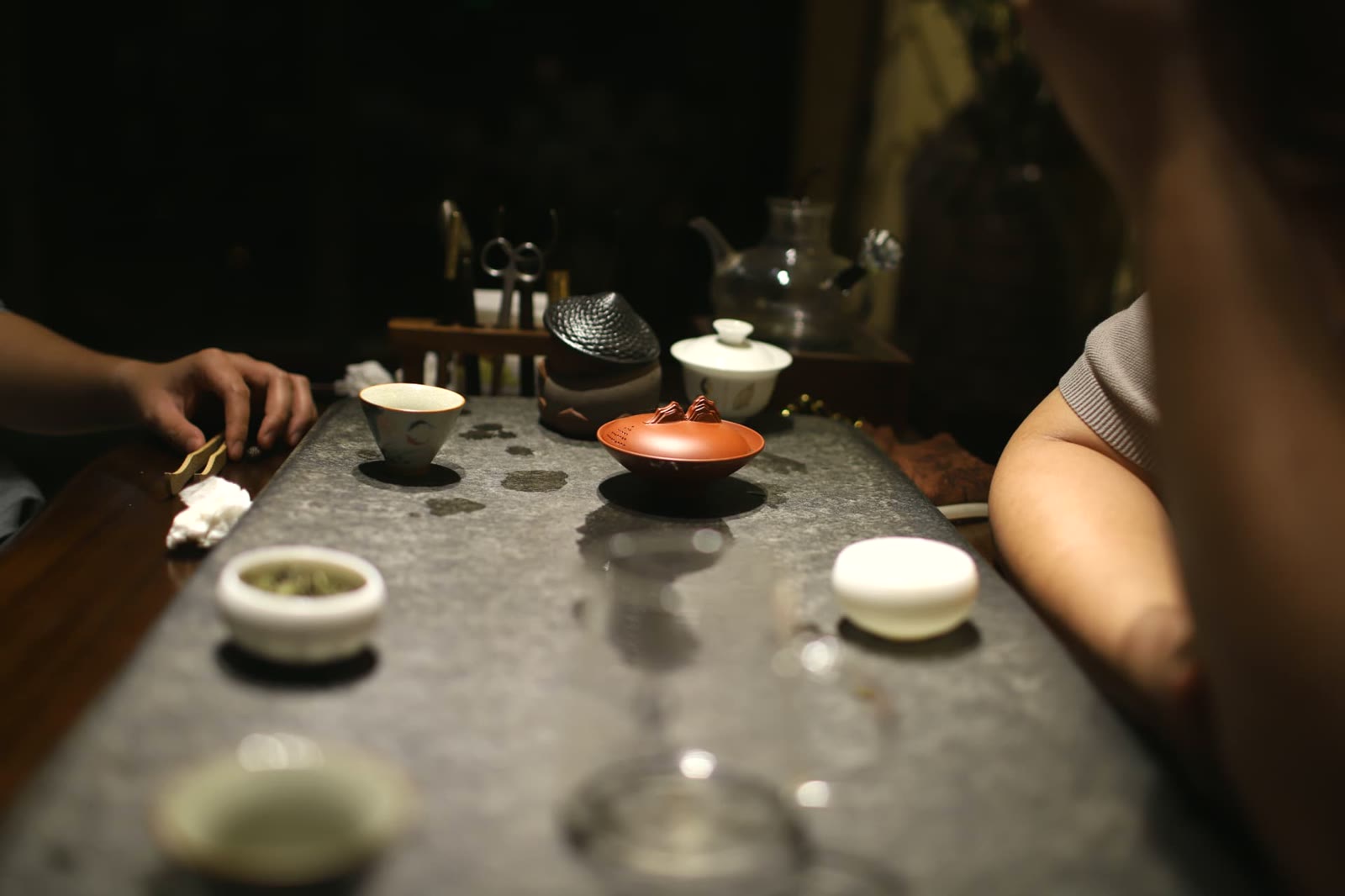
There’s a saying among seasoned tea makers: good tea can tolerate a bad brewer, but only once. This means that precious ancient-tree tea leaves, which naturally carry the scent of the mountains for hundreds of years, will turn into mere astringent water if brewed incorrectly. Conversely, a skilled brewer can awaken layers of aroma in the tea leaves that even the tea pickers themselves find surprising.
Brewing tea, therefore, is not an esoteric ritual reserved for connoisseurs. It is simply an act of care for the tea leaves: understanding what the tea needs, providing it precisely, and without haste. This article slowly walks through each step — from choosing water, tea quantity, temperature, to the rhythm of each steep — so that anyone can brew a cup of ancient-tree tea with its true soul.
Water — half of the tea cup
The ancients said “tea first, water second” — tea ranks first, water second. But in daily tea brewing, water is even more important than that: poor water will drag precious tea down to ordinary status, while good water preserves the soul of the leaves.
The best water for brewing tea is soft, low-mineral spring water. In the city, filtered water through a good filter or low-mineral bottled water is a safe choice. The most important things to avoid are tap water with a chlorine smell and hard water with high calcium content — these two subtly kill the delicate aroma of ancient-tree tea.
A detail few people pay attention to: water should only be boiled once. Water that is boiled repeatedly loses dissolved oxygen, resulting in a lack of freshness and a “dead” taste in the tea. Therefore, for each tea session, a fresh pot of water should be boiled, just enough for use.
Tea-to-water ratio — don't be stingy with the leaves
The most common mistake for new ancient-tree tea drinkers is using too little tea, out of stinginess. But precisely that stinginess makes the tea liquor thin, lacking structure, and prevents one from appreciating the beauty of the tea type in hand. Ancient-tree tea is brewed with many leaves, little water, and many infusions — quite different from brewing a large pot to drink all day long with everyday tea.
An easy-to-remember starting ratio: 5 grams of tea for 100 ml of water. For a 100–120 ml Yixing pot or gaiwan, this amount of tea fills about one-third of the pot's bottom. For young ancient-tree green tea, you can reduce it to 3–4 grams. This number is not dogma — after a few tea sessions, your hands and palate will instinctively know whether to add or subtract.
Temperature — the most delicate detail
There is no single universal temperature for all teas. Young leaves fear scorching hot water, while mature leaves and fermented teas require very hot water to release their fragrance. Grasping this principle means you've covered eight-tenths of the journey.
Young ancient-tree green tea: 80–85 degrees Celsius. Water boiled and then left to cool for about three to four minutes is ideal. Water that is too hot will 'cook' the young leaves, making the tea bitter and losing its freshness. White tea: 85–90 degrees. Oolong tea and ancient-tree black tea: 90–95 degrees. Pu-erh — both raw and ripe — requires boiling water at 100 degrees, and the pot must be thoroughly warmed before brewing.
If you don't have a thermometer, observe the water surface: 'shrimp-eye' bubbles forming around the bottom of the pot indicate about 80 degrees; a gentle simmer means 90 degrees; a vigorous rolling boil is 100 degrees. Tea masters of old brewed tea their whole lives using only their eyes and ears like this.
The rinsing rhythm — where the brewer's skill is revealed
With ancient-tree tea, each infusion tells a different story. The first rinse — pouring hot water in and immediately pouring it out — is not to wash away dirt, but to awaken the leaves: allowing the dry leaves to meet the steam, gradually unfurl, and be ready to release their fragrance in subsequent infusions.
First infusion: 10–15 seconds. Second infusion: 10 seconds. Third infusion: 15 seconds. From the fourth infusion onwards, add 5–10 seconds each time. Good ancient-tree tea can withstand eight to ten infusions, and the interesting paradox is that the middle infusions — the third, fourth, and fifth — are often when the tea tastes best: the flavors have fully opened, and the sweet aftertaste begins to rise in the throat.
A cardinal rule is to never let water sit in the pot between infusions. Prolonged steeping will extract too much astringency, making subsequent infusions harsh and bitter. Pour each infusion completely, as the very last drop in the pot is the most concentrated.
Tools — simpler than you think
You don't need a full tea ceremony set to get started. Three items are enough: a small teapot or gaiwan of 100–120 ml, a fairness pitcher (gongdaobei) to equalize the pour for even strength, and a few small cups. Clay teapots enhance the flavor of oolong and pu-erh teas; white porcelain is neutral, suitable for tasting and comparing various teas; glass is beautiful for brewing green and white teas.
A small note regarding ancient-tree tea: the leaves are very large and long. When they unfurl in the pot, they can block the spout. Choosing a pot with a wide mouth and good filter will make brewing much easier.
Drinking — the final act of brewing
If you brew tea only to drink it hastily, all the meticulous effort put into it beforehand will be in vain. Once the hot tea is poured, don't drink it immediately. Let the aroma precede: bring the cup to your nose, inhale gently, and then take a small sip, allowing the tea to roll over the tip of your tongue, the sides of your tongue, and then down your throat.
The beauty of ancient-tree tea lies in its 'hồi cam' — the sweet aftertaste that returns after swallowing. After a sip of tea, wait silently for a few seconds. That cool sweetness rising from the back of your throat is the most authentic measure of a good mountain tea, one that no advertisement can replace.
And finally, a simple truth: the best tea is tea that is brewed fresh to be enjoyed. Don't brew a large pot and let it sit. Each infusion is a fresh start — sit down, pour, drink, then pour again. This unhurried rhythm, ultimately, is what ancient-tree tea wishes to impart to the drinker.