


When you hold a handful of dried Shan Tuyết tea in your hand — long, curled tea strands, covered in white 'snow' — it's hard to believe that just a few weeks prior, they were fresh leaves atop trees several meters tall amidst the misty forest. From those leaves to the cup of water before you is a journey where, at each stage, even a slight error can drastically alter the tea's essence.
This article follows a batch of tea from start to finish — not to boast about the process, but for the drinker to understand: why ancient tree tea is never cheap, and why each batch of tea is unique.
Stage one: entering the forest at the right season
Ancient tree tea is not harvested year-round like lowland tea. The trees yield tender shoots worthy of picking only in specific seasons — the best being early spring, when the 'snow' buds are plump after the cold winter, and autumn, when the sun is gentler. Pickers must monitor the weather daily: too much dew makes leaves damp, heavy rain damages leaves, and intense sun causes buds to age quickly.
The path to ancient tea villages often involves several hours of walking through the forest. Tea pickers carry baskets, food, and sometimes stay on the mountain for a week during tea season. The trees are tall, leaves are scattered, and each tree yields only a very small amount of young leaves — this natural scarcity dictates the value of the tea from the moment it's still on the branch.
Stage two: hand-picking each bud
No machinery can climb an ancient tea tree. Every tea bud is hand-picked, according to specific standards for each tea variety: one bud one leaf, one bud two leaves. Experienced pickers can distinguish sufficiently mature buds just by sight and the resilience under their fingertips.
Hand-picking is slow — even a skilled person can only pick a few kilograms of fresh leaves per day from ancient trees. But it is this slowness that preserves the integrity of the leaves: no bruising, no crushing, no old leaves mixed in. Freshly picked leaves are immediately spread thinly in the shade, not left to stew in baskets for too long.
Stage three: withering — waiting for the leaves to yield
Fresh leaves arriving at the initial processing point will be spread thinly to wither. This might sound simple, but it's a crucial step that determines the aromatic foundation of the entire batch of tea. Withering is the process where leaves lose some water, gradually soften, and aromatic compounds begin to transform. Insufficient withering results in a grassy taste; over-withering causes the aroma to dissipate.
The artisan monitoring the withering doesn't look at the clock — they peel, smell, and gently crumple leaves in their palm. When the leaf edges slightly curl and the fresh grass scent turns into a faint floral aroma, that's when the leaves are ready for the pan. For high-mountain tea, this stage is directly influenced by the forest's humidity, so each day's withering is different — there's no fixed formula, only experience.
Stage four: pan-frying and rolling — where the tea's form is created
Pan-frying tea uses the heat of the wok to halt the oxidation process in the leaves, preserving the green color and freshness of green tea. The heat must be even, the hands quick, and the leaves in the wok constantly stirred to ensure even cooking without scorching the edges. Experienced tea pan-fryers can tell if the wok is at the right temperature by observing the smoke color and listening to the sizzling sound of the leaves.
Rolling the tea leaves, either after or concurrently with pan-firing: applying hand pressure to gently shape the soft leaves into twisted strands. This process not only forms the tea but also breaks down leaf cells, allowing the tea compounds to dissolve easily during brewing. The intensity of the rolling force determines the tea's strength and the final shape of the finished leaf. For large-leaf ancient tree tea, hand-rolling is the most laborious step—a batch of a few kilograms can take hours to complete.
Stage Five: Sun-drying in the Mountains, Wind-drying in the Forest
Unlike industrial teas that are rapidly dried at high temperatures, artisan ancient tree tea is dried slowly: either sun-dried in the early mountain light or gently dried over charcoal stoves. This slow drying preserves the raw fragrance of the leaves—a mountain and forest aroma that no artificial flavoring can replicate.
This is also why artisan tea is vulnerable to the weather: a prolonged period of rain can ruin an entire batch of tea that is half-dried. Tea makers in the highlands, from ancient times to the present, have always lived in tune with nature's rhythms—a reality rarely imagined by city dwellers when they hold a packet of tea in their hands.
Final Stage: Arriving at the Teaboard
The dried tea is carefully selected—removing old stems, yellowed leaves, and sifting out impurities—then immediately sealed in airtight packaging to preserve its aroma. From here, each batch of tea carries the unique imprint of a season, a mountain slope, and an artisan's hand. Two batches of tea, even from the same region, will never be exactly alike—much like two vintages of wine from different years.
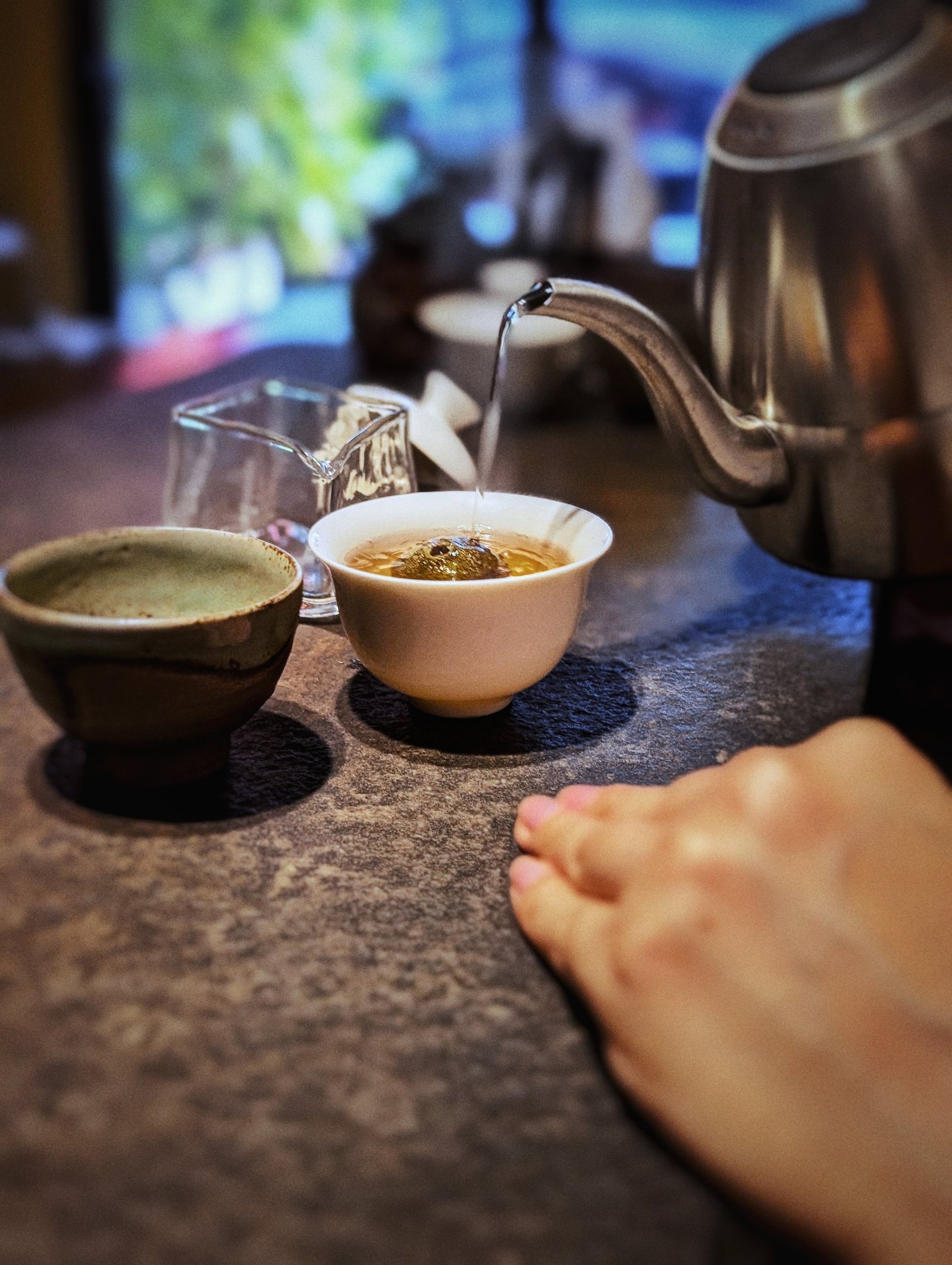
Therefore, when you brew a cup of ancient tree tea, you are drinking an entire journey: the rain and sun of a year, the forest path walked by tea pickers, and the star-lit nights spent pan-firing the tea. Understanding this journey, one naturally slows down and savors the cup more—and perhaps, that is the ultimate gift a good batch of tea wishes to bestow upon the drinker.