
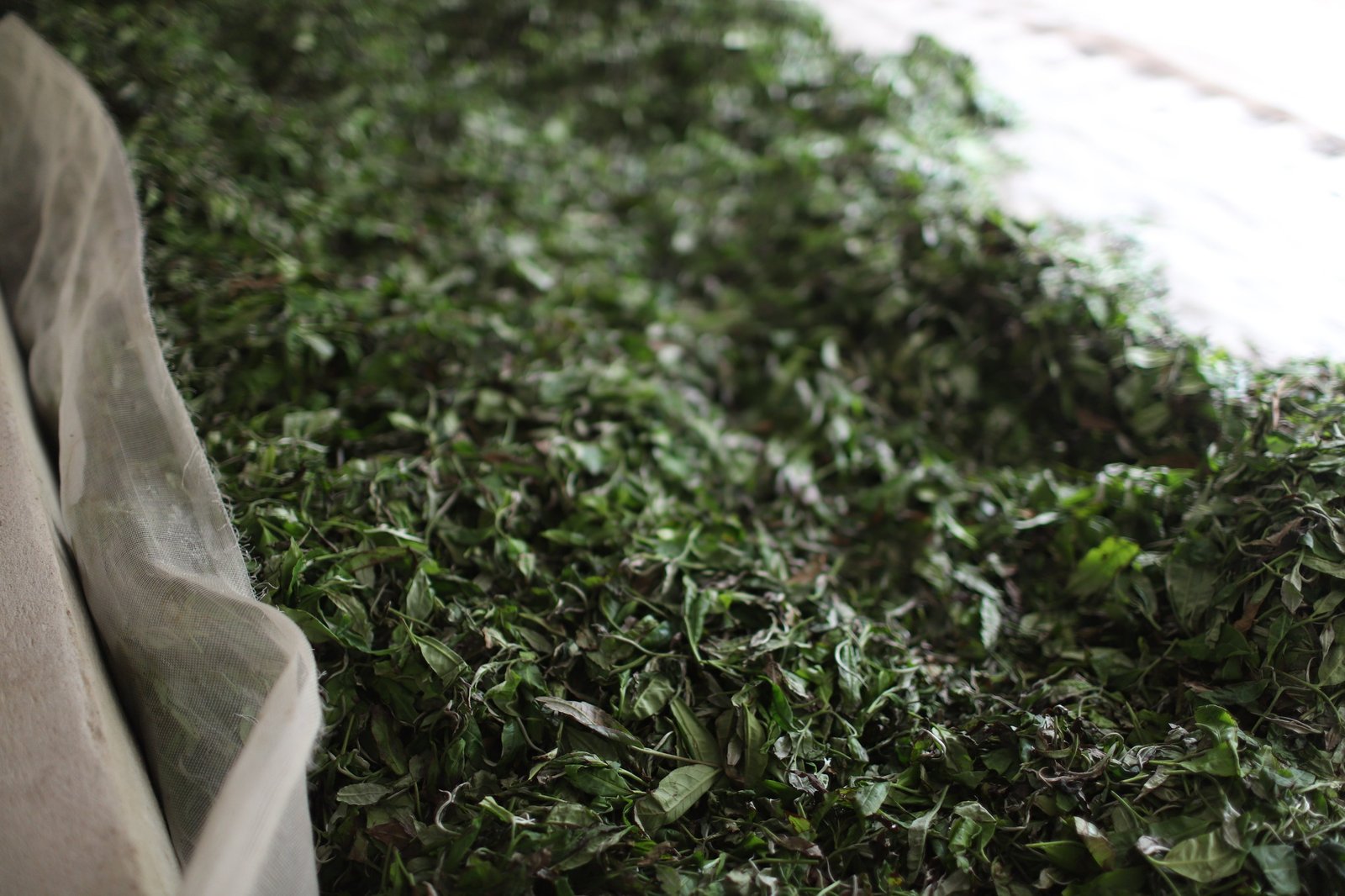
Almost every true tea in the world comes from a single species: Camellia sinensis. What makes the difference between a clear cup of green tea and a dark brown pu-erh is not the plant variety, but the tea maker's hand: when to harvest, how long to wither the leaves, where to stop oxidation, and how to dry them.
Once you understand that, the tea classification chart becomes less confusing. Below is how we explain it to new guests, right at the tea table.
Six Types of Tea, One Plant
Green Tea: enzyme activity halted early by pan-firing or steaming, keeping leaves green. Fresh, grassy flavor, quickly sweet aftertaste.
White Tea: almost no intervention, leaves are merely withered naturally and sun-dried. Light, delicately sweet, with notes of honey and dried flowers.
Yellow Tea: rare, an additional gentle moist-piling step makes the flavor rounder and less astringent than green tea.
Oolong Tea: partially oxidized, ranging from 15% to 70%. This is the most versatile type, offering notes from white flowers to ripe fruits and roasted honey.
Black Tea: nearly fully oxidized. Mellow flavor, honeyed sweetness, perfect for a cold morning.
Pu-erh Tea: post-fermented tea, can be aged for many years. Raw pu-erh is fresh and strong, ripe pu-erh is mellow, earthy, and woody.
How Ancient Tree Tea Differs from Hillside Tea
Hillside tea is grown at lower elevations, regularly pruned, and harvested multiple times a year. Ancient tree tea (cổ thụ) grows naturally on high mountains, with deep roots, yielding only a few harvests annually.
A cup of ancient tree tea is usually less astringent, has a longer-lasting sweet aftertaste, and possesses what tea makers call “tea qi” (khí trà) — a warming sensation that spreads down the back and neck.
That's also why Việt An Trà only seeks out ancient tea trees that have lived for many years on the mountains, instead of buying tea by volume.
Where to Start
If you're used to strong coffee: start with ancient tree black tea or ripe pu-erh.
If you prefer light, refreshing tea to drink all day: white tea or ancient tree green tea.
If you want to explore aromas: floral-scented Oolong is the most pleasant entry point.
The surest way is to taste several types side-by-side in a single session. Your palate learns faster than memory.
Three Common Misconceptions for Beginners
“Bitter tea is strong tea.” Not true. Harsh bitterness is often a sign of improper brewing: water too hot or steeped too long.
“The more expensive the tea, the harder it is to brew.” On the contrary, good tea is more forgiving for beginners.
“Old tea is spoiled tea.” For white tea and pu-erh, time is a friend — if stored correctly.