


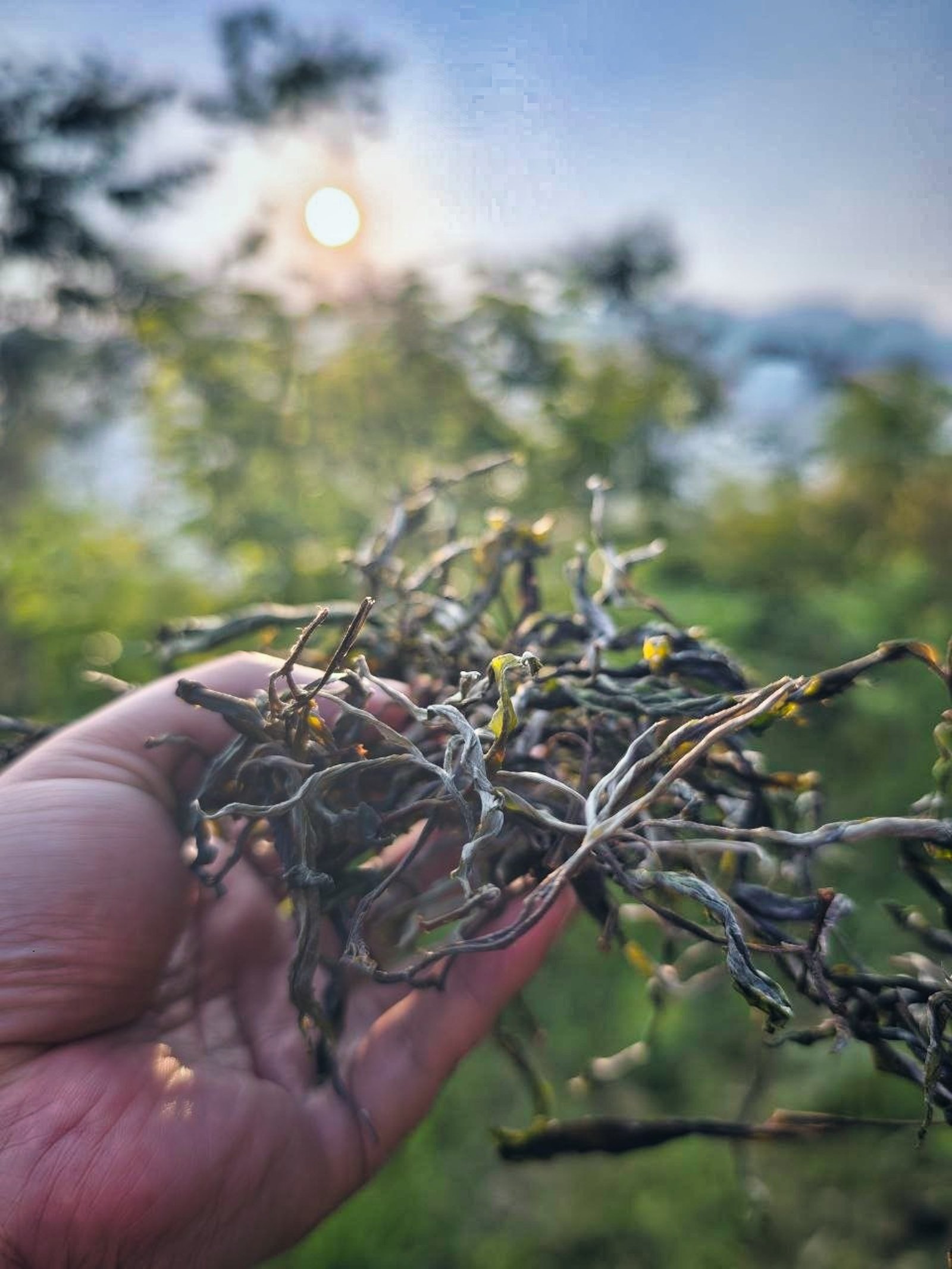
There's one thing few tea sellers openly admit: buying good tea is only half the story; the other half lies in how you store it. Ancient tree tea, with its delicate layers of aroma accumulated over hundreds of years in the leaves, can lose everything in just a few months of improper storage—turning into tasteless, lifeless leaves without so much as an apology.
The good news is that storing tea doesn't require expensive equipment. It simply requires you to understand what tea fears and to protect it from those elements. This article compiles the principles every tea connoisseur upholds, ensuring your precious tea remains delicious down to the very last cup.
The Four Enemies of Tea Leaves
First is moisture. Dry tea leaves absorb humidity very quickly; with high humidity, tea begins to oxidize, mold, and lose its aroma. Second is sunlight: UV rays decompose aromatic compounds and cause tea to develop a “sun-scorched” smell—a faint, burnt scent that cannot be remedied. Third is foreign odors: tea absorbs smells like a sponge; if stored near spices, coffee, or perfume, the tea will take on their scent. Fourth is air: oxygen slowly degrades tea, especially green tea.
All principles of tea storage, no matter how complex they sound, ultimately boil down to avoiding these four enemies.
Tea Storage Containers—Simple and Effective
The best container for daily-use tea is an airtight tin box or ceramic jar, placed in a dry, dark, cool location. Glass jars are beautiful but should only be used if stored in a closed cabinet—light passing through glass every day will subtly degrade the tea.
A golden rule: divide the tea. Instead of opening the entire large bag every day, pour a two-to-three-week portion into a small jar, seal the remaining tea tightly, wrap it in another layer of bag, and store it separately. Each time the bag is opened, moisture and air rush in — dividing the tea helps the unused portion “sleep soundly.”
Green tea and white tea — need cold
Young green and white teas are the “freshest” types of tea, and also spoil the quickest. For these two types, the refrigerator's crisper drawer is your best friend — but it must be done correctly: the tea must be wrapped very tightly (at least two layers of airtight bags) before being placed in the fridge, absolutely avoiding condensation from seeping into the leaves.
When taking tea out to use, do not open the bag immediately. Let the tea bag gradually cool down to room temperature for several tens of minutes — if opened while the tea is still cold, moisture in the air will condense directly onto the leaves, causing even greater damage than not refrigerating it at all.
Oolong and black tea — stable but not complacent
Aged Oolong and black teas, having undergone thorough processing, are more stable: a sealed, dry, dark jar, away from odors, is sufficient to keep them delicious for one to two years. For heavily roasted Oolong, many even enjoy “nurturing the tea” — letting the tea rest for a few months for the flavor to settle and become smoother before drinking.
The only thing to avoid is letting the tea absorb moisture without realizing it. If you open the jar and find the tea soft, losing its crispness, spread it out on a tray and gently dry it at a very low temperature — the tea can still be saved if caught early.
Pu-erh — an interesting exception
Pu-erh is the only type of tea that defies all rules: it doesn't need to be absolutely sealed; it needs to breathe. Raw Pu-erh tea lives and continues to ferment over the years, transforming from bitter and astringent to mellow and profound. Storing Pu-erh requires a dry, lightly ventilated, odor-free place — a wooden shelf in a dry room is ideal; absolutely avoid refrigerators and tightly sealed plastic bags.
In Vietnam’s climate, the humid season is the biggest challenge for Pu-erh. On days of high humidity, the tea should be kept in a more enclosed room, and desiccant packs can be placed nearby (not touching the tea). After the humid season, open and check — if the tea cake is dry and has a warm, gentle aroma, the tea is “developing” beautifully.
Signs that tea needs to be drunk quickly
Learn to listen to your tea. Good tea, when opened, has an immediate burst of aroma, crisp leaves, and a vibrant color. When the aroma has “faded,” the leaves are soft, and the color is dull — that’s when you should invite friends over and finish it, rather than regretfully storing it further.
And a final piece of advice from tea lovers: the best tea is the tea that is drunk. Careful storage is to prolong the joy, not to turn a packet of tea into a display item. Buy just enough to drink within a few months, drink slowly, drink discerningly — that is the true way to cherish a precious tea.